|
I summited Everest on May 21, 2011 and have climbed it three other times (all from Nepal) - 2002, 2003 and 2008 each time reaching just below the Balcony around 27,500' (8400 meters) before health, weather or my own judgment caused me to turn back. I attempted Lhotse twice - 2015 and 2016. When not climbing, I cover the Everest season from my home in Colorado as I did for the 2004, 2005, 2006, 2007, 2009, 2010, 2012, 2013, 2014, 2015, 2016 , 2017, 2018, 2019, a virtual 2020 season, 2021, 2022, 2023, 2024 , 2025 and now the 2026 season.
This page is an overview of Everest climbs and an index for the other pages with more information on routes, pictures, essays, trip reports and more.
|
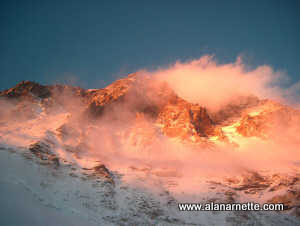 Mt. Everest is the most famous mountain in the world. Drawing climbers for almost a century, it is know as Chomolungma Peak in Tibet and Mount Sagarmatha in Nepal. Mt. Everest is the most famous mountain in the world. Drawing climbers for almost a century, it is know as Chomolungma Peak in Tibet and Mount Sagarmatha in Nepal.
The north side was first attempted by a British team in 1922. They reached 27,300' before turning back. The 1924 British expedition with George Mallory and Andrew Irvine was notable for the mystery of whether they summited or not. Mallory's body was found in 1999 but there was no proof that he died going up or coming down. It was a Chinese team who made the first summit from Tibet on May 25, 1960 by Nawang Gombu (Tibetan) and Chinese Chu Yin-Hau and Wang Fu-zhou who is said to have climbed the Second Step in his sock feet.
However, the first summit of Mt. Everest was by Sherpa Tenzing Norgay and New Zealander Edmund Hillary with a British expedition in 1953. They took the South Col route which is used by the majority of modern expeditions. At that time the route had only been attempted twice by Swiss teams in the spring and autumn of 1952. They reached 8500m well above the South Col. Of note, Norgay was with the Swiss thus giving him the experience he used on the British expedition. The Swiss returned in 1956 to make the second summit of Everest.
Today, hundreds of climbers from around world try to stand on top of the world.
Everest 2025: Strong Numbers and Hard Lessons
The 2025 Everest expedition has come to a close, marked by strong winds, drones, challenging climbing, and innovative strategies. Along the way were reports of frostbite and helicopter evacuations, but many of these incidents went unreported. Yet, as always, the mountain reminded us that respect is never optional at 8,848 meters.
The Numbers
According to the December 2025 update from the Himalayan Database, 851 climbers reached the summit in the spring season, 731 from the Nepalese side and 120 from the Tibetan side, representing the third busiest season on record after the 877 summits achieved in 2019. On the Nepal side, 303 members were supported by 428 Sherpas, a strong 1.4:1 Sherpa-to-member ratio, suggesting that more support is required for increasingly inexperienced clients. The Tibet route saw smaller, steadier teams: 68 members and 65 Sherpas, or a support ratio of roughly 0.76:1, consistent with its more experienced approach.
Across both routes, 766 men (56% success) and 85 women (76% success) reached the top, extending a positive trend in women's participation and completion rates. Almost every climber used supplemental oxygen, all but four, underscoring how central oxygen management remains to Himalayan logistics.
Route Performance
On the south side, 63% of member with permits (303 of 481) ended in success. The north posted a much higher rate of 86% (68 of 79). Alpenglow noted
"This spring, our Alpenglow Expeditions team returned to the North Side of Mount Everest with a small crew and a big plan. After months of preparation, pre-acclimatization, and weather watching, our Everest expedition 2025 culminated in an incredibly rare summit day, blue skies, no wind, and a quiet mountain."
Losses and Lessons
Tragically, five climbers died this season, all on the Nepal side, setting the fatality rate at roughly 0.27%. That’s among the lowest on record, but each number tells a story of risk — a reminder of Everest’s tiny margin for error. Even with modern communications, higher flow oxygen systems, and sophisticated forecasts, the mountain still demands discipline and humility.
Rescues
The well-respected Global Rescue evacuation operation noted a dramatic increase in rescues again suggesting inexperienced clients or unprepared operators.
"We handle several rescue operations every day throughout the spring Everest climbing season, keeping our team engaged from before sunrise well into the night," said Dan Stretch, a Global Rescue operations manager who has overseen more than 500 evacuations and crisis responses in the Himalayas. "At peak activity, our medical and rescue teams have performed up to 25 rescues in a single day, sometimes more."
Record Summits
There were milestones worth celebrating:
- Kami Rita Sherpa,55, reached an unprecedented 31st Everest summits, continuing to redefine endurance on the world’s highest peak.
- Kenton Cool, 51, expanded his record for a non Sherpa with his 19th summit.
- Anja Blacha, 34, became the first German woman to summit without supplemental oxygen on the last summit day of the season, a remarkable show of strength and resolve.
The gender gap continued to close, as several of the year's most focused and disciplined climbs came from women.
Noticeable Trends
The 2025 season reflected many current trends:
- Shorter expeditions. The average time to summit was 28 days in 2025, compared to 33 in 2019, 36 in 2010, and a whopping 48 days in 2005. Operators are acclimatizing on lesser peaks like Lobuche and having clients pre-acclimatizing at home using Hypoxic tents to arrive in Nepal acclimatized to at least 17,000 feet.
- Multiple Sherpas climb with one client continued. On the Nepal side, 303 members were supported by 428 Sherpas, a strong 1.4:1 Sherpa-to-member ratio. The one-and-a-half Sherpa for each foreigner has become the norm, with some teams having a 2 or even three-to-one support ratio, especially when using extra supplemental oxygen.
- Formula climb with operators using the same route, placing camps at the same spot annually, and now the fixed ropes are being centrally managed by the Expedition Operators Organization out of Kathmandu.
- Luxuries continue to expand despite the authorities' best efforts to tame them. It's common to see clients sleeping off the ground on cots with mattresses, down duvets in stand-up tents, a long way from crawling into a North Face VE25 to sleep on the ground. The Internet is widely available, as is wine with dinner and croissants for breakfast.
- Weather remains the highest barrier for all climbers, regardless of fitness, guide, or experience. Unstable weather windows, erratic jet stream activity, and crowd flow created long lines in the usual spots.
Everest in Context
Viewed against historical data, Everest has grown markedly safer even as traffic has increased. Between 1923 and 1999, there were 1,170 summits and 170 deaths, a 14.5% fatality rate. From 2000 to 2025, climbers achieved 12,567 summits with 169 deaths, dropping the rate to 1.4%. Still, several years stand out for massive death numbers, 2014, 2015, 2019, and 2023, then mostly natural disasters like serac falls, earthquakes, and avalanches pushed totals sharply upward. Notably, 39% of Everest member fatalities on the Nepal side, 82 of 208, have occurred during descents from the summit, when climbers are exhausted.
Death rates across all the world's high mountains continue to decrease primarily due to larger Sherpa support ratios, more reliable oxygen at flow rates up to 8 lpm, improved gear, accurate forecasting, and a shift toward professional guiding on established routes. While among all 8,000-meter peaks, Everest holds the highest absolute number of deaths (339), it has a relatively low death rate of 1.07%.
However the historical leaders with high death counts, while reduced, remain high as shown by Annapurna I with roughly 75 recorded deaths and around 510 summits, the fatality to summit ratio is about 15% and the infamous K2 has reduced from 25% to today's 12% primarily due to Nepalese Sherpa companies commercializing the climbs with strong support, standard routes, high oxygen flows and repeatable logistics. Cho Oyu continues to be the safest 8000er at 0.53%, followed by Lhotse at 0.62%.
2026 Preview: A New Era of Costs and Choices
The Nepali government confirmed a permit fee increase to $15,000 per foreign climber effective September 1, 2025, up from the longtime $11,000 rate. Combined with insurance, logistics, and agency fees, this could raise average expedition costs by $5,000 to $7,000 per person, bringing a Sherpa-led expedition on the Nepal side to a median price close to $60,000, and for a Western-led climb, now $100,000 or more. While China has not increased its permit fees, in my opinion, look for operators to normalize prices for parity on both sides, thus increasing their profit margins.
With Nepal prices increasing, as is the crowding and negative publicity around long queues near the summit, look for 2026 to be a test season to see if climbers will move en masse to the less crowded, albeit more technically demanding Tibetan side. In any event, as of December 2025, operators are putting out "last call" for their 2026 Everest expeditions as they fill up quickly.
You are about to spend $10,000 or even $50,000 to climb the mountain of your dreams but are you ready? Summit Coach's consulting service can help climbers of all experience levels better prepare and increase their chances of a positive expedition. Based on Alan Arnette’s 23 years of high altitude mountain experience and 30 years as a business executive, we help aspiring climbers throughout the world achieve their goals through a personalized set of consulting services.
The menu at the top of each Everest page links to:
- Pictures from the climbs are organized in six albums by the trek in, base camp, Khumbu Icefall, Lhotse Face, South Col and Above and a Best of Everest Album.
- Videos from my Everest climbs.
- Alan's Khumbu Trek, 2002, 2003, 2008 and 2011 summit Climbs with an overview and dispatches sent during the climbs
- Coverage and commentary for the 2004, 2005, 2006, 2007, 2009, 2010, 2012, 2013, 2014, 2015, 2016 , 2017, 2018, 2019, a virtual 2020 season, 2021, 2022, 2023, 2024 , 2025 and now the 2026 season.
- 6 essays on topics from money to family to death
- Extras including Everest for Kids, Musical Slide Show and Pictures of the South Col Route plus the Northeast Ridge Route map and Communications from Everest
- Frequently Asked Questions (FAQ)about climbing Mt. Everest, Khumbu Trek and 8000m climbs
|
Everest 2002 Climb

In 2002 I attempted Everest using the Southeast ridge route. This was my most difficult climb thus far due to the length of the trip, logistics and health. I reached 27,200' (8250m), a personal record, before turning back just below the balcony due to a lung infection. It was a fabulous trip that I never anticipated making when I starting climbing seven years earlier.
There were 155 summits in 2002 with 2 deaths.
Continue reading about the Everest 2002 climb.
|
Everest 2003 Climb
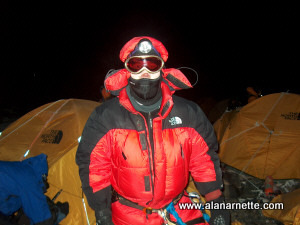
I returned to Everest in 2003, to attempt the South side again. While it was incredible to be back only ten months after my 2002 climb, it was a big disappointment with altitude sickness and weather problems. I knew about halfway through I would not summit so I reset my goal to go as high as I could - safely - and reached 27,200' (8250m), the exact same spot as 2002.
There were 267 summits in 2003 with 4 deaths.
Continue reading about the Everest 2003 climb.
|
Everest 2004 Coverage
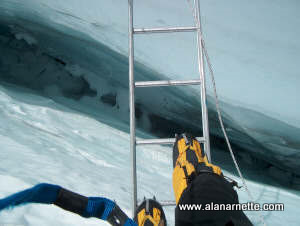
Over 337 climbers reached the summit on all routes, 99 on May 16 and 17 alone!. 169 summiteers were clients, 169 guides and Sherpas. There were 7 deaths. By far, Sherpas have summited Everest more than any other category of climber. The most sought out Sherpas have summited 5 or more times and know the routes, conditions and how to deal with Westerners.
Continue reading about Everest in 2004 |
Everest 2005 Coverage
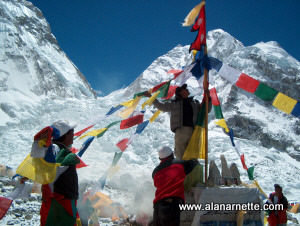
Quite a season! The summits on May 21 were the latest first summit day in 45 years of climbing Mt. Everest. Norgay and Hillary did it on May 29, the earliest was April 4 in 1984. But it was still a good year for summits with 307 climbers standing on the top of the world. Sadly there were 6 deaths.
The season started quickly with teams arriving early and getting their acclimation trips in by early May. They were assuming a "normal" season with first summits around May 15. But the Jet just sat there. It didn't move and when it did, it came back so quickly that the 3-day window never materialized. So the climbers sat in base camps. Some went down valley to enjoy the rich air and sleep on real beds, some went on sight seeing trips to nearby Monasteries and other just sat there. But they entertained themselves with chess games, concerts, hockey games and swap meets. These climbers are creative if nothing else!
Continue reading about Everest in 2005
|
Everest 2006 Coverage
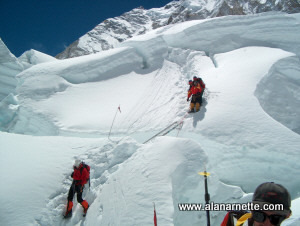
The season started with controversy as the political unrest in Katmandu delayed many expeditions and created uncertainty that gear and climbers would arrive on time. However it all got sorted as seasoned leaders guided their teams through the bureaucracy, small arms fire and chaos that comes with a country in turmoil.
But by early April base camp on both sides were established and teams got settled in. However there was a huge surprise for this season! The weather was spectacular and teams on the north took advantage of it by aggressively fixing the ropes to the summit (and beyond!).
It was a record year for summits with 479 reaching the top from both sides but there was also 11 deaths, the most since 1996.
Continue reading about Everest in 2006
|
Everest 2007 Coverage
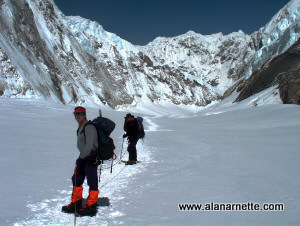
The season started early - late March - with the arrival of the huge IMG team closely followed by the Xtreme Everest Medical expedition into Nepal. Over on the north it seemed that Hollywood had moved to Tibet for April and May.
Dispatch after dispatch spoke of their "film crew" and some climbers were worried about their bad hair days. But one climber stood out - David Tait. The British climber was on a mission to raise money for his charity by attempting the never before accomplished double traverse. He began posting his thoughts, fears and observation in a rarely seen candid manner.
It was another record year for summits with 632 reaching the top from both sides but there was also 7 deaths.
Continue reading about Everest in 2007
|
Everest 2008 Climb
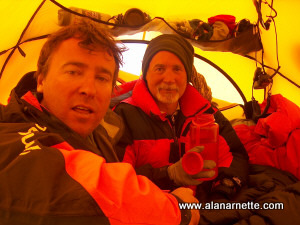
I returned to Everest in 2008, to attempt the South side again as part of The Road Back to Mt. Everest . I had trained hard with four previous high altitude climbs in the prior 8 months. I felt great the majority of the climb but felt it was too dangerous for me to continue and turned back at the Balcony or 27,500' (8300m) which was 1535 ' short of the highest point on earth. This was my highest altitude ever reached.
I have written an extensive document on the experiences during this climb as impacted by the Chinese Olympic torch summit and closure of the north and heavy restrictions on the south side. It is a PDF document named Everest 2008: Mountain of Politics
426 people summited in 2008 with only 1 death.
Continue reading about the Everest 2008 climb
|
Everest 2009 Coverage
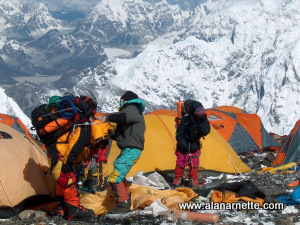
Overall this was one of the safest seasons in the past few years in spite of some difficult weather that created a long delay in early May. There were over 400 summits and sadly 5 deaths on Everest and one on Lhotse.
Similar to 2008, the Chinese Tibet Mountaineering Association (CTMA) changed the rules and gave vague guidance to teams during the critical planning period resulting in almost all of the major north side operators making the switch to Nepal. That fueled speculation of overcrowding, bottlenecks and record summits and record deaths. And in the end it was just speculation.
462 summits and 5 deaths.
Continue reading about Everest in 2009
|
Everest 2010 Coverage
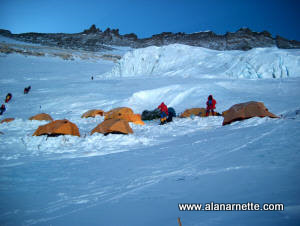
By recent standards, Everest 2010 was a safe and successful year. There were about 537 summits (347 from the south) with 3 reported deaths, all on the north, and several injuries and rescues. The total Everest summits broke the 5,000 level since 1953.
This year's story line for climbers and their families was the weather, however it was all Jordan Romero and Apa Sherpa for the rest of the world.
For the first time in several years, the north operated in an almost normal manner. Teams dealt with a few border restrictions early but arrived at base camp and immediately began their acclimatization rotations.
On the South, the ropes were in early and the weather seemed drastically different from the North, at least in April.
Continue reading about Everest in 2010 |
Everest 2011 Summit
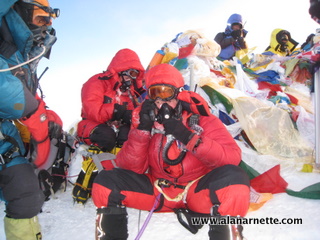
I summited Everest on May 21, 2011 from the Nepal side in 2011 with International Mountain Guides and Kami Sherpa. This was part of The 7 Summits Climb for Alzheimer's: Memories are Everything® campaign.
It was very humbling standing on the summit after all my attempts but more gratifying was the reaction to my Alzheimer's awareness and fund raising efforts. Thank you everyone who participated.
I approached this climb quite differently from previous attempts including preparation, to training to guide service and more.
The Himalayan database states there were 537 combined summits from both sides 58% summit to climbers at base camp. 375 summited from Nepal and 162 from Tibet. 4 deaths.
Read the live updates from Everest 2011 |
Everest 2012 Coverage
Perhaps the most dramatic year since 1996. A lack of snow combined with high winds created dangerous rock fall on the Lhotse Face causing many injures primarily to Sherpas before the route was moved to a safer passage to Camp 3.
However, these dangers plus the deaths of three Sherpas early in April from multiple causes, caused the Sherpas from Himex to lose confidence. Russell Brice, arguably the most famous of the Everest commercial operators, cancelled his entire Himalayan spring season (Everest, Lhotse and Nuptse) taking over 100 people off the mountain. It was an unprecedented decision.
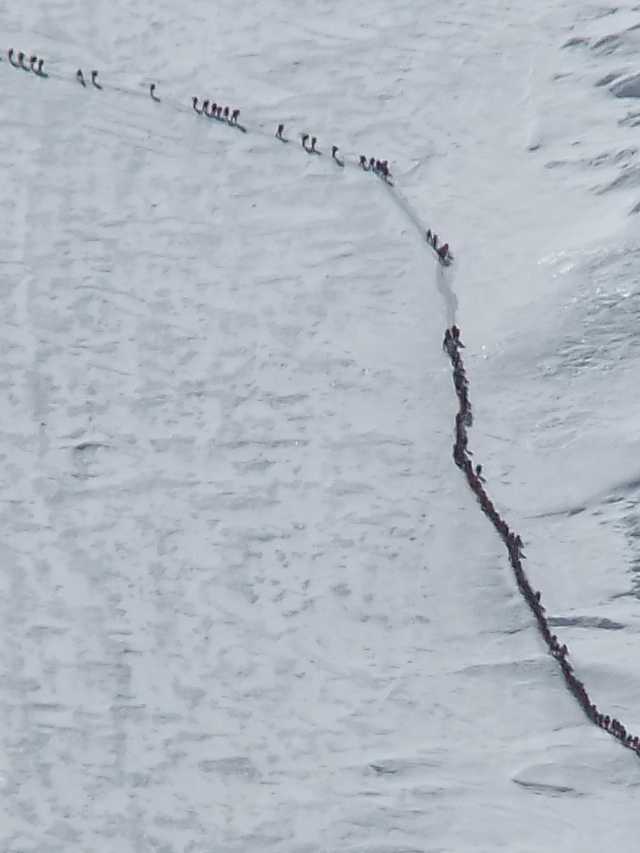
The other teams continued fighting difficult weather on both sides of Everest and with only four days of suitable weather for summit pushes endured the famous crowds at the normal bottle necks of the 2nd Step, and the Hilary Step. Totally unrelated to the crowds, weather or rock fall, 6 more climbers died primarily from poor decision making or altitude related illnesses generating sensational headlines around the world and calls for regulation on Everest.
There were 558 summits in the Spring of 2012, 441 on the south and 147 on the north. 10 confirmed deaths.
Continue reading about Everest in 2012 |
Everest 2013 Coverage
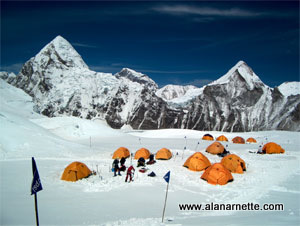
Everest 2013 was a good year for most climbers but a difficult one for the professionals. Overall it could be termed a normal year with little drama with one large exception.
There were 670 summits in the Spring of 2013, 541 on the south and 124 on the north. 8 confirmed deaths.
For many climbers, they accomplished a life long dream, returned safely home to a family who have started to breath again. With an unparalleled lifetime experience, for some their lives were changed forever.
Continue reading about Everest 2013
|
Everest 2014 Coverage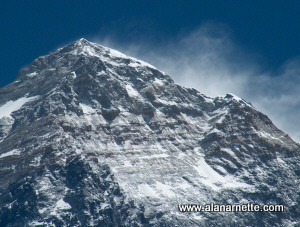
The The Everest 2014 season was full of tragedy with 19 deaths, shameful exploitation and thin coverage of the real story by the general media. In my season summary, I look at what happened, the reasons for effectively closing Everest from Nepal, the roles played by all parties and some ideas on a credible path forward.
The summary is not a sound bite, it is long, complicated and will take time to digest. Just like anything with Everest it will evoke emotions and reactions. My hope is for badly needed changes on Everest. A mountain I value and whose climbers I admire - past, present and future.
There were 124 summits from the North and 4 from the South which were disputed as the climbers took helicopters to and from Cam 2. There were 17 deaths from an avalanche off the West Shoulder of Everest onto the Khumbu Ice fall.
Continue reading about Everest 2014 |
Everest 2015 Coverage
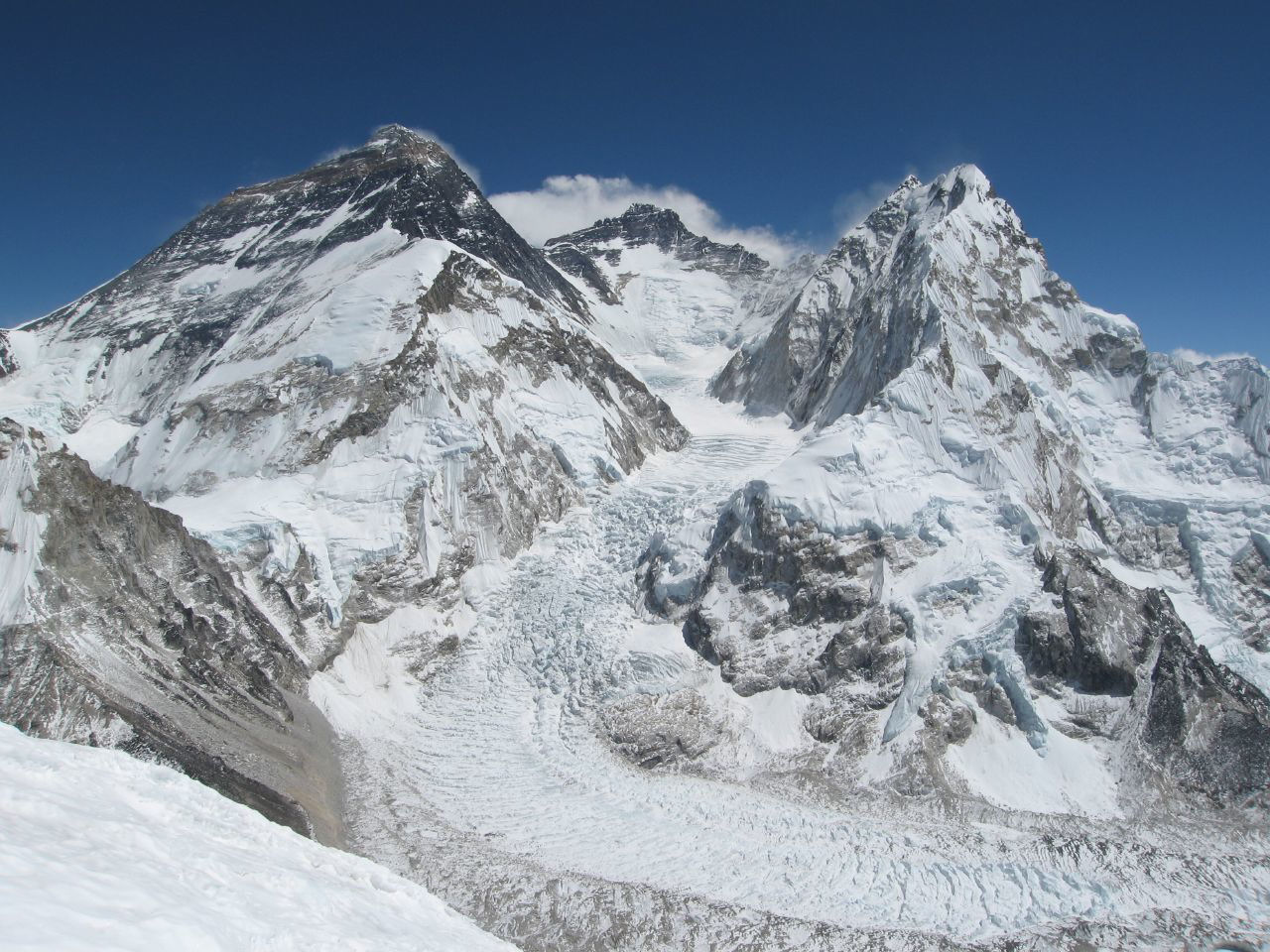
Another tragic season but this time due to an earthquake, not climbing events. 19 people were killed at Everest Base camp then the Chinese closed the North fearing aftershocks. Nepal continued to promote climbing but no team wanted to risk going back through the Icefall.
For the first time since 1974, there were no Spring summits on Everest from any route, any camp by any means.
Continue reading about Everest 2015
|
Everest 2016 Coverage
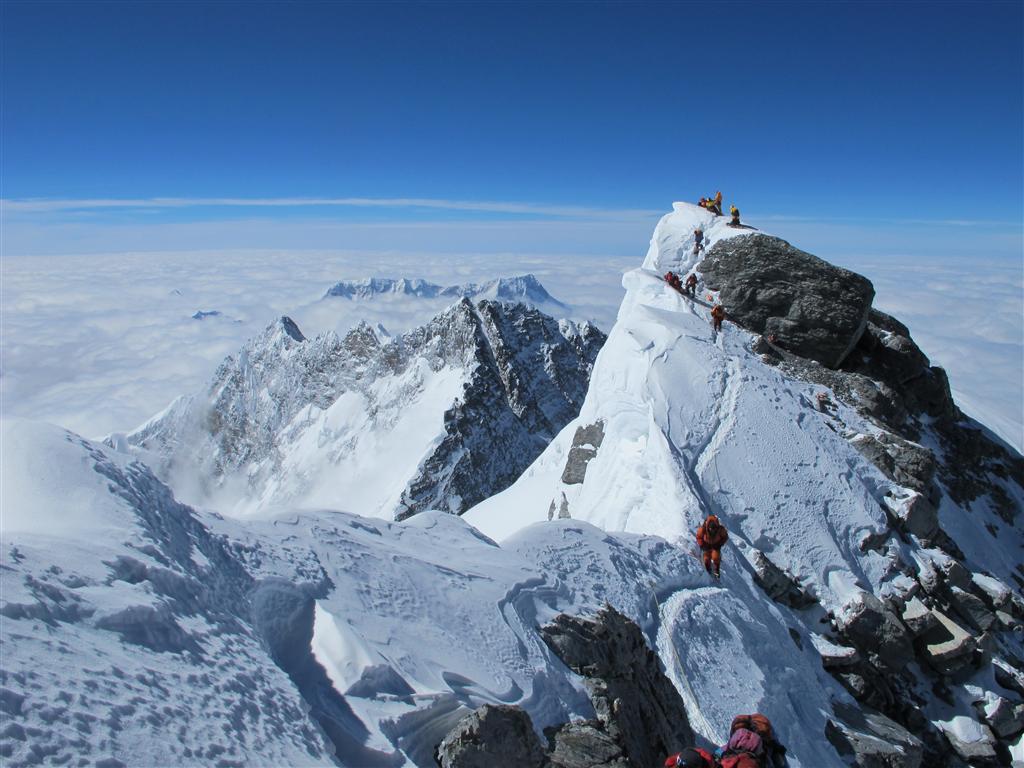
Everest 2016 was a success by many measures. Climbers achieved life long dreams and a country got a break. It was a "normal' season with 648 summits in the Spring of 2016, 446 on the south and 202 on the north. 5 confirmed deaths plus one on Lhotse.
However in stark contrast to the previous four years on Everest, 2016 lacked large scale tragedy or extreme drama.
Continue reading about Everest 2016 |
Everest 2017 Coverage
This is one of the more difficult seasons I have covered to sum up in one word so let me use several: wind, tragedy, misinformation, spin and summits.
Overall it was a good year, a normal year with many summits on both sides plus the average death toll. I think we saw how the pressure to be first with news can backfire with incorrect stories but we also saw the power of dreams.
Similar to 2016, there were no natural disasters or issues with people getting along, other than a few individuals acting very irresponsibly and selfishly.
While weather forecasting proved to be challenging across the entire two month season, it was not an inhibitor to teams reaching the summit.
Finally the fear of overcrowding, dangers of the Khumbu Icefall or China closing Everest forever, proved unfounded.
Bottom line - it was good year on Everest and for both Nepal and China, and for hundreds who quenched a long thirst to stand on the summit of Mt. Everest.
In 2017 there were 648 summits, 237 from Tibet and 411 from Nepal and 11 didn't use supplemental oxygen. There were 6 deaths, 3 didn't use Os and only 1 died on the descent.
Continue reading about Everest 2017 |
Everest 2018 Coverage
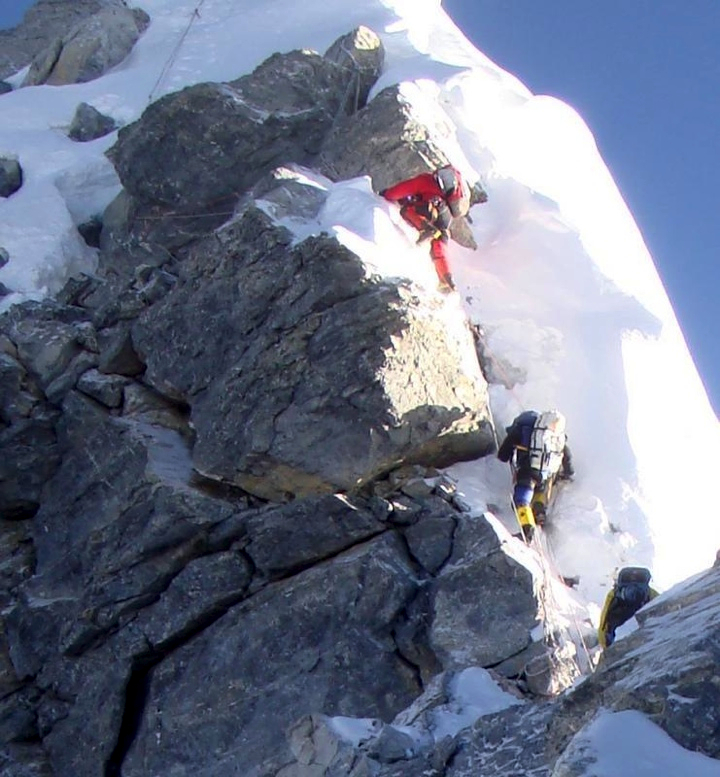
Early in May, there was talk of early summits but then the jet stream moved on top of Everest and stopped all activity for a week. When a large high-pressure system parked on the summit, the door was opened and stayed that way for 11 straight days.
The first summits were on May 14 by the rope fixing team on the Nepal side followed the next day by 70-year-old Chinese double-amputee Xia Boya with his Sherpa guides. Every day thereafter had summits from both the sides. Overall it was about as good of a season as could be expected on the world's highest peak.
The temperatures were bit warmer than usual and the winds were calmer in spite of the occasional "difficult" summit day. With the long weather window, teams spread out thus reducing the usual crowding we've seen before. In 2012 there were less than five suitable summit days forcing hundreds to attempt the peak on the same day.
2018 was a record year for Everest summits. The previous record year was 2013 with 670 total summits by all routes. The Himalayan Database has updates for 2018. There were 802 summits and only 1 who did not use supplemental oxygen and 68 females. The Nepal side saw a total of 562 summits made up up 266 foreigners (aka members) and 296 High Altitude Workers (aka Sherpas). For the members who got above base camp, 76% went on to summit. On the Tibet (aka Chinese) side there were 110 summits for workers and 130 by foreigners for a total of 240 summits. 66% of the members above base camp summited. There were a total of 5 deaths in spring 2018, 4 on the Nepal side and 1 on the Tibet side. 1 climbing was climbing without supplemental oxygen and was on the south side.
Continue reading about Everest 2018
|
Everest 2019 Coverage
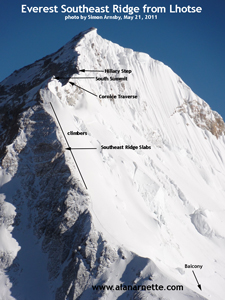
There were approximately 871 summits on Everest in the Spring of 2019 plus 11 deaths. All-time number of people who summited Everest is now 10,155, including multiple summits in one season by one person, and 306 for total deaths. Still, Everest is one of the safest 8000ers.
2019 was all about the weather. The notorious jet stream was "wobbly" in the words of Chris Tomer of Tomer Weather Solutions. It colluded with Cyclone Fani to delay the ropes reaching the summit.
On the Nepal side, the ropes finally made the top due to some incredible efforts by a team of Sherpas. Beginning on May 22, hundreds summited early each morning for several days and once again death was in the air.On May 23, a shocking photo of a line of climbers on the Hillary Step went viral showing everything bad about Everest. The root cause of the lines were slow climbers with guides who failed to properly manage their clients.
How 2019 unfolded was predictable. In 2018, Everest hosted a record 802 people on her summit from both sides. The death toll was five, about the same each year for the past 10 or so. They died from what people usually die from on 8000-meter mountains: altitude sickness, exhaustion, health issues, and the occasional fall. All tragic, but all somewhat expected. But in 2019 with 11 deaths, over half were what I term "avoidable."
I've been writing about two major trends that have been rising and reached a crescendo in 2019: inexperienced climbers and unqualified guides. These two factors along with a "wobbly" jet stream and record 381 foreigner permits issued by Nepal conspired to create a deadly combination of independent factors during the peak of a truncated weather window in late May.
Six months after the spring season, the biggest question is what, if anything, will Nepal do about the crowds, the experience of the climbers and the qualifications of the guides. While there are solutions I'm not optimistic anything will change. For more details, please see my complete summary.
Continue reading about Everest 2019
|
Everest 2020 Coverage
Both China and Nepal closed Everest due to the COVID-19 virus in 2020. However, China allowed a national team and a survey team to climb to celebrate the 60th anniversary of the first Northside summit by a Chinese/Tibetan team.
There were 51 summits this spring, all Northside: 8 Tibetans rope fixers, 8 Chinese survey team and 14 Chinese nationals supported by 21 Tibetans. Congrats to all. These were the latest summits in decades due to deep snow. New altitude measurement expected in a few months.
I did a "Virtual" season coverage where I created a fictional team of climbers. All but one summited:) Also, we raised money through eight guide companies around the world on behalf of the Climbing Sherpas who lost significant income by not working this spring.
Continue reading about Virtual Everest 2020
|
Everest 2021 Coverage
The spring 2021season on Everest was perhaps the most complicated in history. With COVID out of control in India and then to Nepal, it didn't take long for it to reach Everest Base Camp, in spite of the governments adamant denials and cover ups. Also participating in this scandal were some guides who feared punishment for spreading "bad news", a tarnished reputation for not taking care, or simple greed to ensure future business - we'll never know.
China closed Tibet to all foreigners but allowed one national team to climb, but they cancelled a few weeks in citing fear of getting COVID from the Nepal side climbers on the summit - laughable.
The Nepal government issued a record 408 permits to foreigners but only an estimated 195 members summited, 47%, compared to 76% in 2019. An estimated 150 people were evacuated from Everest Base Camp with COVID symptoms. An astounding 339 Sherpa summited, continuing the trend of Sherpa dwarfing foreigners for Everest summits. Two members and three Sherpa died this spring, on the low-end of the usual death count on Everest. We need to wait for the Himalayan Database to tally the final numbers.
I expect 2022 to be a record year on everest with price increases across the board. There was little learned from the 2021 season.
Continue reading about Everest 2021
|
Everest 2022 Coverage
2022 brought even more stable weather windows than during the great Everest 2018. During May, a stalled high-pressure system made for horrendous temperatures in Northern India while paradoxically creating nearly ideal climbing conditions across much, but not all, of the Himalayas.
In 2022 there were 683 summits, including only 12 from Tibet as it was closed but 671 from Nepal and all but 5 used supplemental oxygen. Unlike previous seasons, this spring saw more experienced climbers resulting in fewer deaths, rescues, and an overall low-drama environment. Despite this good news, there were periods of brutal weather and climbing conditions, and yes, there were rescues, close-calls, and, sadly,3 deaths.
This season, we saw the continued trend of a very high member-to-support ratio. A milestone reached with more Sherpas summiting than foreigners in total since Everest climbing began in the 1920s. We'll dig into this later. All in all, it was a year like we saw a decade ago. But, unfortunately, it was not without deaths, three deaths on Everest and three more on the other 8000ers.
In the good news department, for the first time in many years, the Nepal Ministry of Tourism seemed content to stay out of the way and the headlines. But, this spring, significant changes appeared in the world of mountaineering. These changes will disrupt decades of climbing norms on the 8000-meter peaks.
Continue reading about Everest 2022
|
Everest 2023 Coverage
The 2023 Everest spring season ended with some records to take pride in and others to be avoided. If there were one word to summarize the season, it would be chaotic or perhaps deadly. This spring was the deadliest season in history on Everest. It was also brutally cold.
There were around 665 summits on the Nepal side and 12 from Tibet which was still closed to foreigners. There were a record 18 deaths - 5 Sherpas and 12 clients. In my estimation, five were preventable.
Nepal issued a record 478 climbing permits to foreigners. Add in one and a half Sherpa supporting each foreigner; over 1,200 people pursued the summit this spring. Fears were rampant of a 2019 repeat with long lines and deaths. The lines never developed, thanks in part to colder weather that sent a higher number of climbers home in mid-season, many with a persistent virus. However, the deaths developed, but not because of the record permits or climate change. These are red herrings to abdicate responsibility.
About 667 reached the summit, about 50% of the total permits with support. Once again, more Sherpas, 378, summited than clients, 277, according to the Himalayan Database.
What stole the headlines were the seemingly daily reports of rescues, frostbite, missing climber, and deaths. The root cause of the chaos is still elusive. Some blame the record permit numbers, inexperienced clients, and low-cost operators. However, Nepal government officials cite climate change.
Continue reading about Everest 2023 |
Everest 2024 Coverage
Everest 2024 might be remembered for summits, politics, deaths, ignored rules, near misses and disturbing allegations of sexual misconduct. It’s difficult to put all this in a headline, but I believe the Everest guiding industry is at a Rubicon – a point of no return.
Not to be lost in this mix is the joy and satisfaction felt by hundreds of summiteers. They worked and trained diligently to celebrate standing on the top of the world for only a few minutes. It’s funny how you can work so long for a goal, and the moment is over in a blink, but the memory lasts a lifetime—well done to all who summited, to those who showed up.
Once again, the Sherpas proved they dominated the mountain with impressive altitude performance. The Himalayan Database shows that between 1950 and 2024, 6,593 Sherpas have summited Everest compared to 6,285 members, and that gap is growing each year. However, more foreigners have died than Sherpas, 203 compared to 129.
We may have heard the last chirps from Everest’s “canary in the coal mine.” Between the difficulty of getting the fixed ropes through the Icefall and the collapse of a cornice at the Hillary Step, climbing the reliable Southeast Ridge route could be at risk. The cause is most probably a warming environment.
Nepal’s winter was warmer and drier than any in the earlier decade. Temperatures climbed higher than the winter average, while precipitation was lower than average. Mountains, notably the Himalayas, are geologically unstable. These warm, dry conditions may have affected the Khumbu Icefall, creating challenges for the Icefall Doctors.
As for summits, the Himalayan Database reported in December 2024, based on numbers reported by the Nepal government that from the Nepal side, 319 clients, supported by 468 Sherpas, summited, totaling 787 summits. This level of support came in at a 1:1.5 client-to-support ratio. Nepal issued 421 foreign permits, which makes for a 75% success rate compared to 58% for members in Nepal from 2000 to 2023, per the Himalayan Database. On the Tibet side, there were 74 summits.
All eight of the 2024 deaths were clients with Nepali operators. In 2023, fifteen of the eighteen deaths were with Nepal operators. In just two years, twenty-three people who have died were associated with Nepali mountain guide companies, 88% of the total for the two years, disproportionately higher than their market share.
Continue reading about Everest 2024 |
Everest 2025 Coverage
The trend of large teams receiving substantial support from Sherpas continues unabated. Seven Summits Treks reported a record 103 clients, while 8K claimed 50 clients.
The overall summit count for both sides of Everest in 2025 was around 851, including support climbers such as Sherpas, Tibetans, and Guides, according to the Himalayan Database update in December 2025.
The summiteers included 731 from Nepal and 120 from Tibet, representing the third busiest season on record after the 817 summits achieved in 2019. Countries with the most summiteers included India, 61,the United States at 60 and China with 7.
On the Nepal side, 303 members were supported by 428 Sherpas, a strong 1.4:1 Sherpa to member ratio, reflecting the support required from increasingly inexperienced clients. The Tibet route saw smaller, steadier teams: 68 members and 52 Sherpas, or a support ratio of roughly 0.76:1, consistent with its more experienced approach.
Across both routes, 766 men (56% success) and 85 women (76% success) reached the top, extending a positive trend in women’s participation and completion rates. All but four summiteers used supplemental oxygen.
The 49% client summit rate (303 out of 428) represents a lower-than-average rate compared to recent years, primarily due to challenging and windy weather conditions. Conversely, the Tibetan side experienced smaller teams, some who were patient and waited for good conditions and avoided frostbite that other's experienced. There were around 120 summits, with approximately a 86% summit rate.
Tragically, five fatalities occurred on the Nepalese side, down from the eight deaths in 2024 and eighteen in 2023, which constituted a record season for fatalities. This year’s total is lower than the historical average of seven fatalities per year since 2010. Notably, no deaths were reported from Tibet.
Once again, the Sherpas have demonstrated their dominance on the mountain. The Himalayan Database indicates that between 1953 and 2025, 7.081 Sherpas have successfully summited Everest, compared to 6,656 members from other groups, and this gap continues to widen annually. However, it is essential to note that more non-Sherpa climbers have perished on the mountain, with a total of 208 fatalities compared to 131 Sherpas.
Continue reading about Everest 2025 |
Everest 2026 Coverage

The Nepali government confirmed a permit fee increase to $15,000 per foreign climber effective September 1, 2025, up from the longtime $11,000 rate. Combined with insurance, logistics, and agency fees, this could raise average expedition costs by $5,000 to $7,000 per person, bringing a Sherpa-led expedition on the Nepal side to a median price close to $60,000, and for a Western-led climb, now $100,000 or more. While China has not increased its permit fees, in my opinion, look for operators to normalize prices for parity on both sides, thus increasing their profit margins.
With Nepal prices increasing, as is the crowding and negative publicity around long queues near the summit, look for 2026 to be a test season to see if climbers will move en masse to the less crowded, albeit more technically demanding Tibetan side. In any event, as of December 2025, operators are putting out "last call" for their 2026 Everest expeditions as they fill up quickly.
I expect 900 to 1,000 summits total from both sides this spring, comprising at least 225 on the Tibet total (members plus hired) and well over 800 on the Nepal side. Even with these numbers, the totals will still lag the pre-pandemic record set in 2019 of 877 total summits, comprising 661 from Nepal and 216 from Tibet. Last year, 2025, 731 summits were on the Nepal side, and 120 were on the Tibetan side.
Continue reading about Everest 2026
Everest Stats
Summits - updated December 2025
Early Attempts and Summits
- Everest was first named Peak 15 (XV) and measured at 29,002 feet in 1856
- In 1865, it was named Mount Everest, after Sir George Everest
- Indian mathematician Radhanath Sikdar in 1852, working for the Great Trigonometrical Survey of India calculated the first Everest elevation.
- The first attempt was in 1921 by a British expedition from the north (Tibet) side
- The first summit was on May 29, 1953 by Sir Edmund Hillary from New Zealand and Tenzing Norgay, a Sherpa from India. They climbed from the south side on a British expedition led by Colonel John Hunt.
- The first north side summit was on May 25, 1960 by Nawang Gombu (Tibetan) and Chinese climbers Chu Yin-Hau and Wang Fu-zhou
- The youngest person to summit is American Jordan Romero, age 13 years 11 months, on May 23, 2010 from the north side.
- The oldest person to summit is Japanese Miura Yiuchiro, age 80 on May 23, 2013
- The first climbers to summit Everest without bottled oxygen were Italian Reinhold Messner with Peter Habler in 1978
- Reinhold Messner is the only person to have truly summited Everest solo-completely alone on the mountain, and without supplemental oxygen. He did it in 1980 from the Tibet side via the Great Couloir
Male Summits
- The youngest male to summit is American Jordan Romero, age 13 years 10 months, on May 23, 2010 from the north side.
- The oldest male to summit is Japanese Miura Yiuchiro, age 80 on May 23, 2013
- Kami Rita (Topke) Sherpa (Thami) holds the record for most summits (male or female) with 32, the most recent one in May, 2025.
- Pasang Dawa Sherpa of Pangboche has summited 28 times with the last on May, 2025.
- Legends, Apa Sherpa (Thami Og), Phurba Tashi Sherpa (Khumjung) have 21 summits each. Both are now retired.
- Briton Kenton Cool have the most non-Sherpa summits with 19, the most recent in 2025.
- 12,690 males have summited with a 42% summit rate
Female Summits
- The first woman to summit Everest was Junko Tabei of Japan in 1975
- The oldest woman to summit was Japanese Tamae Watanabe, age 73, in 2012 from the north
- The youngest woman to summit was Indian Malavath Poorna, 13 years 11 months on May 25, 2014 from the north side
- Nepali, Lakpa Sherpani, 48, holds the women's summit record with 10 (3 South, 7 north)
- 1047 women have summited through December 2025 with a 54% summit rate.
Summit Statistics
- There have been 13,737 summits of Everest for a 43% summit rate through December 2025, on all routes.
- 7,563 different people have summited, 0.00000091 of the 8.3 billion people on earth
- 6,654 members (clients) have summited and 7,083 hired (Sherpas)
- 1,779 people have summited multiple times
- Sherpas have the most summits at 7,083 by 1,284 different people
- 124 Sherpas have summited Everest ten or more times.
- There are 1,166 Sherpas with multiple summits totaling 6,359 summits
- The Nepal side is more popular with 9,876 summits compared to 3,861 summits from the Tibet side
- 232 climbers summited without supplemental oxygen through December 2025, about 1.69%
- 35 climbers have traversed from one side to the other.
- 681 climbers have summited from both Nepal and Tibet
- 172 climbers have summited more than once in a single season, including 84 who summited within seven days of their first summit that season.
- About 66% of all expeditions put at least one member on the summit
- Member climbers from the USA have the most country member summits at 1,139, followed by China at 1054, India at 1134, and the UK at 583.
Death Statistics
- 339 people have died on Everest from 1922 to December 2025. This is about 2.5% of those who summited or a death rate of 1.06 of those who attempted to make the summit.
- 207 westerners and 132 Sherpas have died on Everest from 1922 to December 2025.
- Member climbers age 60-64 have the highest death rate at 3.30.
- Westerners die at a higher rate, 1.33 compared to hired at 0.80.
- Of the total deaths, 180 died or 53% attempting to summit without using supplemental oxygen.
- 14 women have died with death rate of 0.73 compared to 1.08 for male climbers.
- Of the 339 deaths, 98 died on the descent from their summit bid or 29%, a rate of 0.72
- The Nepalese side has seen 9,876 summits with 229 deaths through December 2025 or 2.3%, a rate of 1.07. 132, or 58% of the Nepal deaths did not use Os.
- The Tibet side has seen 3,861 summits with 110 deaths through December 2025 or 2.8%, a rate of 1.05. 48, or 44% died on the Tibet side not using Os.
- Climbers from India (30), Japan (20), the UK (19) and the US (17) have the most all-time deaths.
- Most bodies all are still on the mountain but China has removed many bodies from sight.
- The top causes of death on both sides were from avalanche (77), fall (75), altitude sickness (48), exhaustion (32) and exposure (26).
- From 1922 to 1999: 170 people died on Everest with 1,170 summits or 14.5%, a rate of 1.80. But the death rate drastically declined from 2000 to 2023 with 12,567 summits and 169 deaths or 1.3%, for a rate of 0.75.
- However, four years skewed the deaths rates with 17 in 2014, 14 in 2015, 11 in 2019 and the record 18 in 2023, all natural disasters -earthquakes, avalanches, serac collapses.
- At least 11 of the 18 2023 deaths were preventable through better logistics, adequate oxygen and better on-mountain support.
- The reduction in deaths is primarily due to better higher levels of Sherpa support, supplemental oxygen at higher rates, better gear, weather forecasting and more people climbing with commercial operations.
Latest: Spring 2025
- In 2025, there were 851 summits, including 731 on Nepal and 120 from Tibet side.
- The Nepal side broken out by 303 members supported by 428 Sherpas for a support:client ratio of 1.4:1 and on the Tibet side 68 members supported by 52 Sherpas for a support:client ratio of 0.76.
- Of the total on both sides, 766 males (56% success) and 85 females (76% success) summited.
- All but 4 of the 851 summiteers used supplemental oxygen.
- On the Nepal side, 63% or 303 of all 481 attempts by members were successful.
- On the Tibet side, 86% or 68 of all 79 attempts by members were successful.
- Overall, the Tibet side saw a 68% summit rate compared to 57% on the Nepal side.
- There were 4 deaths of Everest climbers, a rate of 0.27
See more stats at this page
courtesy of the Himalayan Database and my own research
|
South Col Route Map
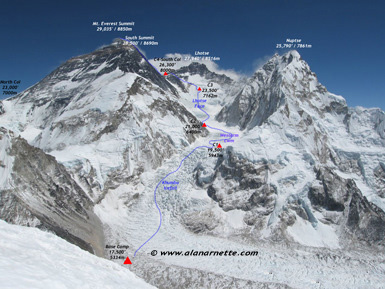
Mt. Everest was first summited by Sherpa Tenzing Norgay and Edmund Hillary with a British expedition in 1953. They took the South Col route which is described on this page. At that time the route had only been attempted twice by Swiss teams in the spring and autumn of 1952. They reached 8500m well above the South Col. Of note, Norgay was with the Swiss thus giving him the experience he used on the British expedition. The Swiss return in 1956 to make the second summit of Everest. Nepal was closed to foreigners until 1950.
Today, hundreds of climbers from around the world use this route to try to stand on top of the world. It is considered slightly more dangerous than the North Ridge Route due primarily to the instability of the Khumbu Icefall. However some considered it slightly easier than the north due to the absence of the ladders and rock climbing on the steep steps of the North Ridge route.
Read more details on the South Col Route
Everest Resources
Based on my own experiences, I worked on these skills before attempting Everest:
- Gained climbing experience to be as self sufficient as possible. All the climbing techniques and skills should be in your muscle memory and not a conscious thought
- Preparing my body to be in “Everest Shape” which is beyond "the best shape of your life"
- Building mental toughness to push yourself while being willing to turn back for safety
CLIMBING SKILLS - knots and roped team travel - crampon skills - ice axe skills including self arrest in all types of positions - crevasse rescue techniques
CAMPING SKILLS - extreme cold weather clothing techniques - packing what you need; not what you want
PHYSICAL TRAINING - stamina, cardio, strength, breathing techniques - understanding how your body performs at altitude preferably at 8000m before going to Everest
MENTAL TRAINING - getting along in close quarters with strangers for 2 months, teamwork
These pages are based on my own experiences:
1. Everest Frequently asked questions and 8000 meter mountains Frequently Asked Questions
2. Skills and Experience
3. Training and Fitness
4. Everest Gear
5. Guides
6. South Side Route Overview
7. North Side Route Overview
8. A description of my first Everest South Climb in 2002
9. A full report of my Everest South Summit in 2011
|
Northeast Ridge Route Map
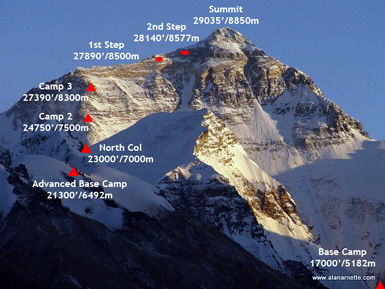
The north side of Everest is steeped in history with multiple attempts throughout the 1920's and 1930's. The first attempt was by a British team in 1922. They reached 27,300' before turning back and was the first team to use supplemental oxygen. It was also on this expedition that the first deaths were reported when an avalanche killed seven Sherpas.
The 1924 British expedition with George Mallory and Andrew Irvine is most notable for the mystery of whether they summited or not. Mallory's body was found in 1999 but there no proof that he died going up or coming down.
It was a Chinese team who made the first summit from Tibet on May 25, 1960 by Nawang Gombu (Tibetan) and Chinese Chu Yin-Hau and Wang Fu-zhou who is said to have climbed the Second Step in his sock feet however without a summit photo, some doubt the summit claim. In 1975, a second summit was climbed by the Chinese and the ladder on the Second Step was installed.
Tibet was closed to foreigners from 1950 to 1980 preventing any further attempts until a Japanese team summited in 1980 via the Hornbein Couloir on the North Face. The north side started to attract more climbers in the mid 1990s and today is almost as popular as the South side when the Chinese allow permits. In 2008 and 2009, obtaining a permit was difficult thus preventing many expeditions from attempting any route from Tibet.
Read more details on the Northeast Ridge Route
Preparing for a Climb is More Than Training
Schedule a Free Call
If you dream of climbing mountains but are unsure how to start or to reach your next level from a Colorado 14er to Rainier, Everest or even K2 we can help. Summit Coach is a consulting service that helps aspiring climbers worldwide their goals through a personalized set of consulting services based on Alan Arnette’s 27 years of high altitude mountain experience and 30 years as a business executive. Please see our prices and services on the Summit Coach website.
|
| |
|
|
| |
|
|
|